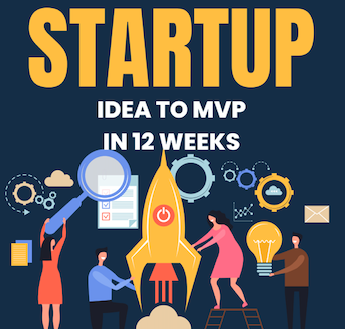
Startup Idea to MVP in 12 Weeks
So you have an interesting startup idea! But you have so many questions and concerns as to how to bring your startup idea to vision!
Your heart and mind is full with challenging questions that confront all entrepreneurs, at some point of their journey, such as:
- - What type of product should I be building?
- - How do I develop my product?
- - What type of features should my product consist of?
- - When is the right moment for my product’s market launch?
- - How do I navigate the journey to sales success?
- - How do I raise funds for my startup?
These critical queries can wield considerable influence over the trajectory of a startup's growth, potentially leading to its rise or precipitating its downfall.
Frshr Technologies
Hello Friends, I am the founder of Frshr Technologies. We work with startups and small companies and we help them build an initial version of their startup idea to an MVP stage (Minimum Viable Product).
We have helped more than 20 founders in the last 4 years and many of them have successfully raised multi-million dollar funds subsequently.
Over the past many years, I have experienced the challenges that new founders and entrepreneurs face regularly. They have great ideas and innovative solutions to many existing problems, but they do not have the skills or expertise to quickly build a product around their ideas.
Often the new founders are caught in a quagmire of what to build, how to build, how much to build, when to take to market, how to take to market, etc questions which proves to be detrimental to their growth and may cause eventual startup downfall.
To address this we penned down this methodology, to summarize our experience of working with many startups and helping them build quick MVPs in a short period of 12 weeks.
Through this methodology, we are trying to summarize the challenges, problems and solutions of building a MVP, and trying to guide scores of upcoming startups in their journey of building a quick product pilot to test their ideas and take it to eventual success
What is an MVP?
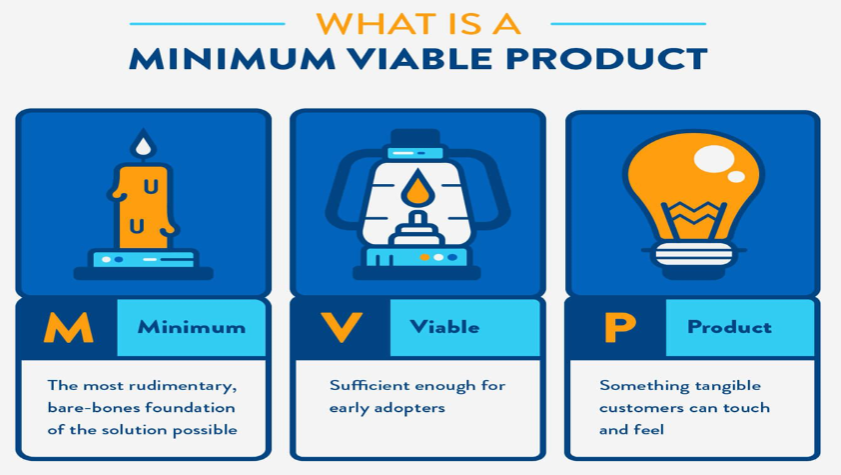
MVP stands for Minimum Viable Product. MVP is a software development technique through which a new software product is carefully crafted with just enough basic features so as to test the waters.
You are a budding entrepreneur and you have a great startup idea. Your challenge is that you don’t know where to start, how to build your product, how to talk to investors and how to take your idea to success. That’s where MVP methodology steps in.
MVP is nothing but a bare-bone prototype of a future product that holds enough value to get the attention of the consumers and the investors alike.
What do the letters M, V and P stand for?
Let’s take the letter ‘M’ first. The M in MVP stands for the word ‘Minimum’. ‘Minimum’ here simply means establishing the base foundation for your software product and the overall solution. You don’t really need to build the complete product to present it to your initial users. What you really need is just enough of the features required so that users understand what your product is all about.
Let’s come to the letter ‘V’ next. V stands for the word ‘Viable’. Viable represents the sufficiency of the product, meaning that the product that is built is useful enough for the user, and that the user can use the product and gets enough value from using the product.”
Finally, the letter ‘P’. P here stands for the ‘Product’, that is the final tangible outcome that a user can feel, touch and decide his or her perspective about it. Product stands for the complete use-case that the software or solution is fulfilling. Hence, what an entrepreneur is building, is its completeness is defined as the Product.
What exactly is your use-case?
Let’s say you are a startup and solving an urban transport problem. How exactly can you go about building a product which solves this problem and offers the user the ability to go from point A to point B?
You might be thinking of building a new car, and offer the car as a solution to the urban transport problem of many users.
And how much time, effort and money will that cost?
Tens of millions of dollars of investment and a few years to get the solution out in the market. But will building a brand-new car solve the urban mobility problem?
So, what exactly is your use-case?
What is the MVP (Minimum Viable Product) approach?

Slowly improvise on your product, build a better solution step by step and eventually provide a fully functional solution to the users in the next few iterations.
This iterative methodology of developing solutions for your startup customers is known as the MVP approach.
MVP is more like building a very initial version of your dream product. This approach is most useful as entrepreneurs would know whether the business idea would actually be viable by testing the assumptions behind a product or business idea.
MVP approach will help you in testing the idea without spending a lot of money.
This helps you to enter the market, with a minimum budget and to maintain a balance between the customers and the company offerings. So that you can develop an initial product and business model without any major errors and still be customer friendly.
Using this methodology you will get a fair idea of your customer’s ask. And it will help you create a balance between your initial product and what exactly your customer needs.
Through this methodology, you get to demonstrate immediate value to customers quickly, with minimum development cost and rapid time to market.

Why build MVP?
MVP approach helps you to enter the market at an early stage, which is a definite advantage. It helps to be in touch with the users and get their reviews and feedback early, without spending a ton of money on a product which may or may not be commercially successful.
Through MVP approach, one can find the right audience and get ideas, to develop products by user feedback and to save time. It also allows business to minimize the errors in the overall development lifecycle.
Facebook Case study: How did Facebook use the MVP approach?
Facebook also started their company with a MVP approach!
Facebook is the best example one can find where a startup took a MVP approach to launch and saw immense success!
It was in 2003-04 when Mr Mark Zuckerberg and his friends launched FaceMash, a very simple online website for his fellow students to connect with each other.
The idea first occurred to him when he noticed that his college, like all other US colleges, had online directories that featured student pictures, along with a brief introduction to them. Since there wasn't a single platform for the students to connect to each other in real time, Mark created one.
How did FaceMash transform into Facebook and what’s the story behind it?
FaceMash was an online service for students to discover other students and rate their profiles. So it was a very early version of various social platforms that we use today.
However, the platform was shut down by Harvard university for not complying with their policies. So in 2004, Mark and his team created another platform called ‘TheFacebook’ and it was an early version of the mega successful website FaceBook that we see today.
This new social network ‘TheFacebook’ was launched in Feb, 2004. Initially only limited to Harvard university students, the students could sign-up using their college email and create a basic profile for themselves.
Students were able to post photographs about themselves and add personal information about their life and share with others.
The vast social platform that we see today was started with just one university!
One university, MVP version of the software and that too with very basic features. That’s the whole premise of MVP approach – Minimum, Viable and Product.
Your startup idea needs to be built to the minimum at first, it needs to be Viable, and it should work like a basic Product which fulfills initial demands of the user.
When the popularity of Facebook hit the roof in Harvard, word of mouth began spreading in other universities as well.
Soon Mark and his team started opening up TheFacebook in nearby universities and the concept caught fire in various universities across the USA, such as Yale and Stanford.
Within a few months, by June 2004, more than 250 thousand students from 34 universities across the USA signed up and started using Facebook regularly.
Paying customers started to knock on the doors of Facebook, as the student enrollment was hitting the roof. Credit card companies such as Mastercard started paying for advertisements on the Facebook platform and this provided much needed ratification and traction to the new social platform.
Startup Traction
How do you explain traction, how do you measure it and what is startup traction all about” Traction is a key concept in the journey of any startup. Acquisition of initial users, paying customers and growth in user adoption of a software product is what traction is all about. All you need is a set of minimum features so that users can get started and bring in new users. Heavy and large features such as the Wall were built by Facebook only after they acquired the initial 250 thousand users.
Network Effect
Network effect is another very popular term in the startup community. Network effect is very crucial to understand if you want to succeed in a market like Social Networking applications where billions of potential users exist and there is an opportunity to scale up really fast with little initial investment. Network effect, to explain in very simple terms, is the phenomena where users get attracted to the platform having maximum number of users, because they get benefitted by the platform where all their friends and family members are already there. It is like going to the biggest mall in the city, because you know that’s where the maximum fun is.
Best Examples of startups succeeding with MVP Approach
Many top unicorn startups that we see today, adopted the MVP approach and tasted success with very little initial investments and iterative development and launch approach. Chief among them are Facebook, Twitter, Amazon, Groupon and Dropbox.

How we can help you in building your MVP
First things first: Safeguarding your IP
Before you explain your product to us, we would like you to sign a NDA document.
An NDA is a Non-Disclosure Agreement, that protects your idea and helps you to be really comfortable that your Idea is safe with Frshr Tech and our tech teams.
Building the MVP with Frshr Tech
Building the MVP is a detailed seven step process. At Frshr Technologies, we guide all our entrepreneurs on these seven steps, and take them through the entire journey seamlessly.

Identify Business Needs
At the onset of this process, the entrepreneur really needs to identify “the business need”.
This is the most critical aspect of building a new software system, and often the least worked upon. The entrepreneur needs to correctly identify whether the market really needs a new software product in the area he or she is planning to venture in.
Oftentimes, the entrepreneur overlooks the research aspect of building a new software system, and the competition has already built solid products in the same area he is trying to venture in.
This means, the entrepreneur is entering a minefield, where there are already a lot of competitors well entrenched in. The existing players in the same arena will know the issues, will have existing customers, their product will be better fine tuned to market needs and they will be better prepared to resist a new entrant.
So, any new entrepreneur, when building a software system, should conduct solid research and he or she should try to enter a market where there is a minimum pre-existing competition. The entrepreneur should correctly identify the business need and should co-relate whether the existing players are able to meet the market needs or is there any actual gap in the market to exploit.
Identify Business Needs
At the onset of this process, the entrepreneur really needs to identify “the business need”.
This is the most critical aspect of building a new software system, and often the least worked upon. The entrepreneur needs to correctly identify whether the market really needs a new software product in the area he or she is planning to venture in.
Oftentimes, the entrepreneur overlooks the research aspect of building a new software system, and the competition has already built solid products in the same area he is trying to venture in.
This means, the entrepreneur is entering a minefield, where there are already a lot of competitors well entrenched in. The existing players in the same arena will know the issues, will have existing customers, their product will be better fine tuned to market needs and they will be better prepared to resist a new entrant.
So, any new entrepreneur, when building a software system, should conduct solid research and he or she should try to enter a market where there is a minimum pre-existing competition. The entrepreneur should correctly identify the business need and should co-relate whether the existing players are able to meet the market needs or is there any actual gap in the market to exploit.
Second step of the process to “Get a clear Idea” is also related to understanding the business need and the associated market. Entrepreneur can adopt several strategies related to getting a Clear Idea around the business and his proposed software product.
In addition to the online research, entrepreneurs can speak to experts in the field, can speak to various startup mentors from Incubators and Accelerators around the country, and can also conduct online or offline surveys to understand customer needs.
Third step of Select the MVP Approach is where we handhold the entrepreneurs. There are several ways in which you can build your Minimum Viable Product or MVP for your startup Idea.
The entrepreneur can also adopt a no-product MVP at the very onset. This approach used by famous companies like Dropbox, only described the solution to customers without actually building the product.
Another approach for building the MVP is to build an initial version using an existing software platform such as WordPress or Magento. Famous startups such as Groupon built their existing MVP on top of existing platforms such as WordPress and they could hit the market with very minimal software development effort.
The MVP approach suggests you to spend as little as time, effort and capital in building an initial version of your product, and use existing platforms, so that you can use your maximum energy and firepower in actually testing the market and selling your product and generating traction.
In addition to the online research, entrepreneurs can speak to experts in the field, can speak to various startup mentors from Incubators and Accelerators around the country, and can also conduct online or offline surveys to understand customer needs.
Fourth step of building an MVP is considering the design process. An entrepreneur can consider a design for this product using wireframes, which are a tool to create the pages, before the actual pages are developed by software developers. Again, a little creativity by entrepreneurs can go a long way.
Fifth step, and arguably the most important step is to actually build a laundry list of features that your MVP will consist of. Here is where it gets tricky and as an entrepreneur you need a mentor to guide you whether or not you need a lot of features for your startup MVP.
An MVP by its very nature, is a Minimum Viable Product. The key word here is Minimum, and hence the list of features you need to test your startup idea should not resemble a long weekend grocery list.
Several entrepreneurs whom we work with, come to us with an exhaustive list of 100+ features for their startup product, and when we discuss with them and consult with them, they realize that they do not need more than fifteen features to make their MVP go live.
An obvious advantage to limit your feature list to less than fifteen is that you will be spending a lot less time and money in building your MVP. You will be able to build a software product with fifteen features in less than 12 weeks, so you will be preserving your money for sales and marketing your new product.
Once your MVP kicks off, and gathers some initial customers, you as an entrepreneur can always keep adding new features and making quick releases.
This approach has the advantage that you will pleasantly surprise your initial customers with frequent releases with new features and will be able to get great free word-of-mouth marketing from them.
Your risk in this MVP approach is really low, and your chances of success are much higher.
The sixth aspect of building your MVP is the Build phase.
Actually getting down to the things, getting your hands dirty and building your MVP is a critical aspect that we want to touch upon a bit.
You will be surprised at the large number of entrepreneurs that are just about to start off, but actually never do. These armchair entrepreneurs are in millions that want to start something revolutionary, but never get around to the build stage.
For an entrepreneur, it is critical to get to the Build stage as soon as possible, and get their startup off the ground.
Seventh and equally important aspect of building your MVP is the Measure and Learn phase.
Continuously measuring and learning from your success is an equally critical aspect of your MVP journey. There are several online tools available, which allow you to measure how a user is using your platform and benefiting from it.
You can track and measure user journeys through your platform. You can track heatmaps, which tell you the places users clicked on your website, and you can understand in detail the usage of your product.
Remember, the success of your product depends on the usage of your product.
This, in summary, is the powerful seven step process which any entrepreneur can use and align his or her startup towards a successful launch!
Your MVP Journey with Frshr Tech
Our firm, Frshr Tech is an innovative software engineering firm specializing in building cutting-edge products for startups. We transform ideas into scalable solutions with a focus on agility, innovation, and startup success.
Below is a detailed roadmap of how Frshr Tech team will work with you for the next 12 weeks:
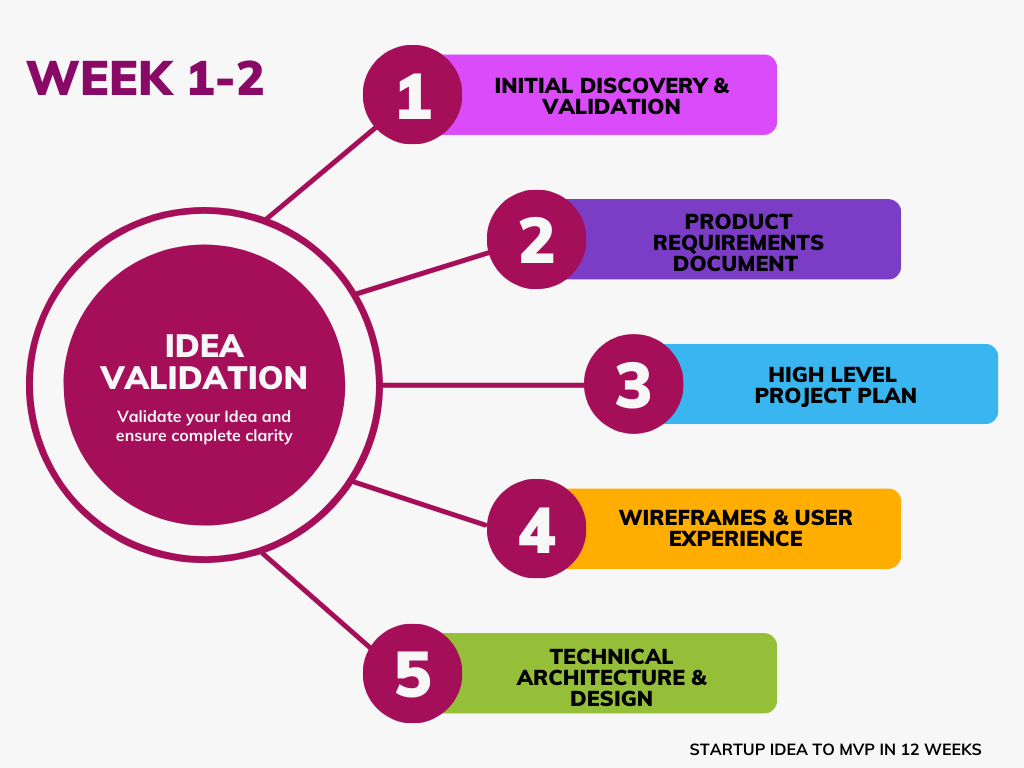
Week 1 & 2
For week one and two, we first focus on the idea validation of your start-up, taking up the frame up, carefully crafting it and then presenting it to our developers so that they start their work on it.
The first activity is the initial discovery and ideation. Here, when you present us with their idea, often you haven’t usually grasped the depth and details of what actually needs to be built. So we help you with the detailing and fleshing out of the product idea by spending more time on the project.
Week 3 & 4
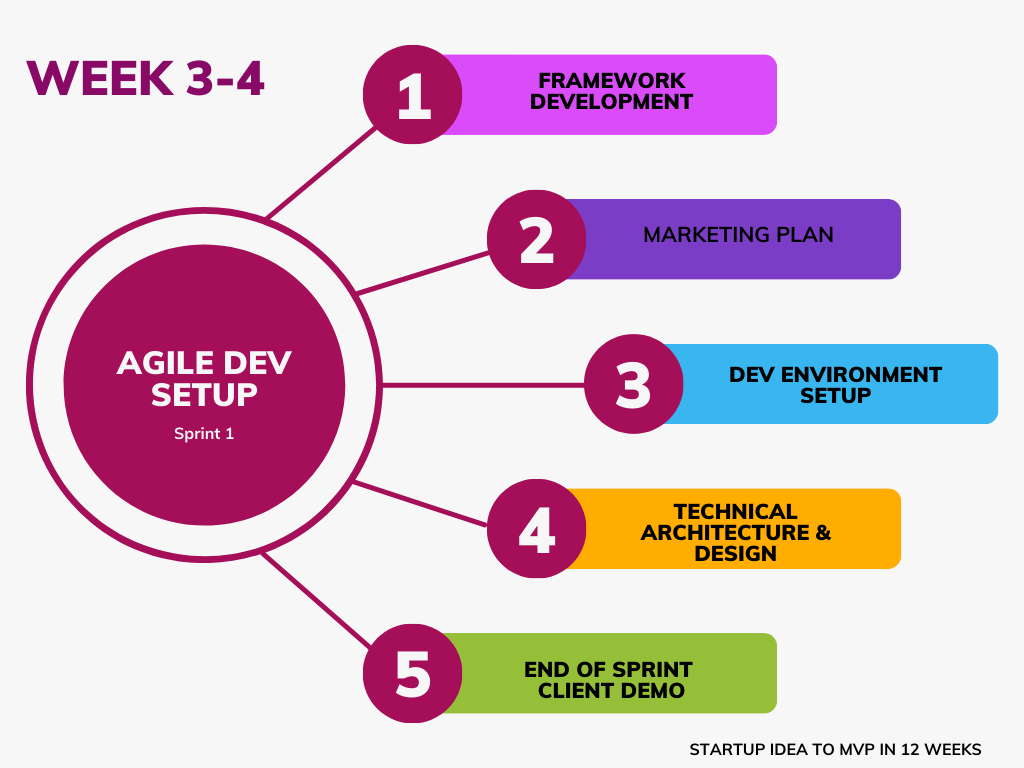
This below picture contains our high-level plan for the third and fourth week. We call this period Agile development set-up.
Agile stands for a rapid software development methodology. It is a process for rapid development, with regular meetings and team sync-up.
We at Frshr Tech do all our projects in an agile manner, effective and fast. All activities including these weekly sync ups, discussions and doubts clearing is a part of that.
This is done so that you know where the development team is, and everyone is at the same page. If there is any problem, we figure out the problem early enough and take remedial steps in a very agile setup.
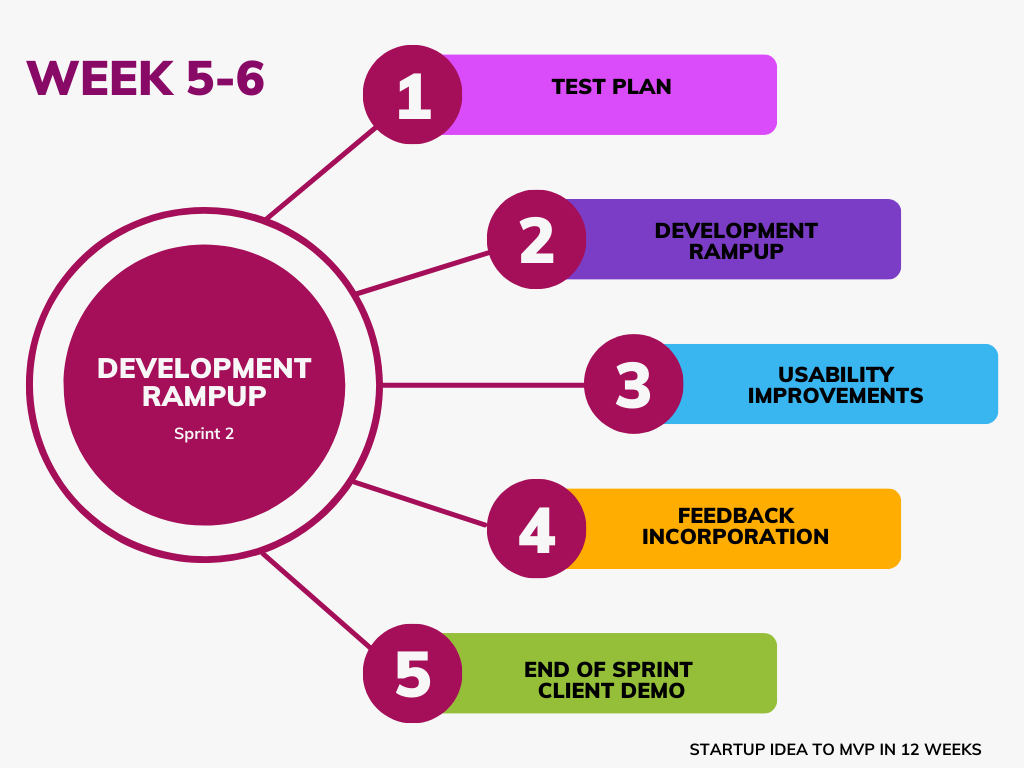
Week 5 to 6
Week 5 to 8 are aptly titled as the two key sprints of the development ramp-up. These two sprints are heavily focused on the nuts and bolts of product development. In this sprint, focus is on building the product features and getting the product to a demo stage.
Week 7& 8
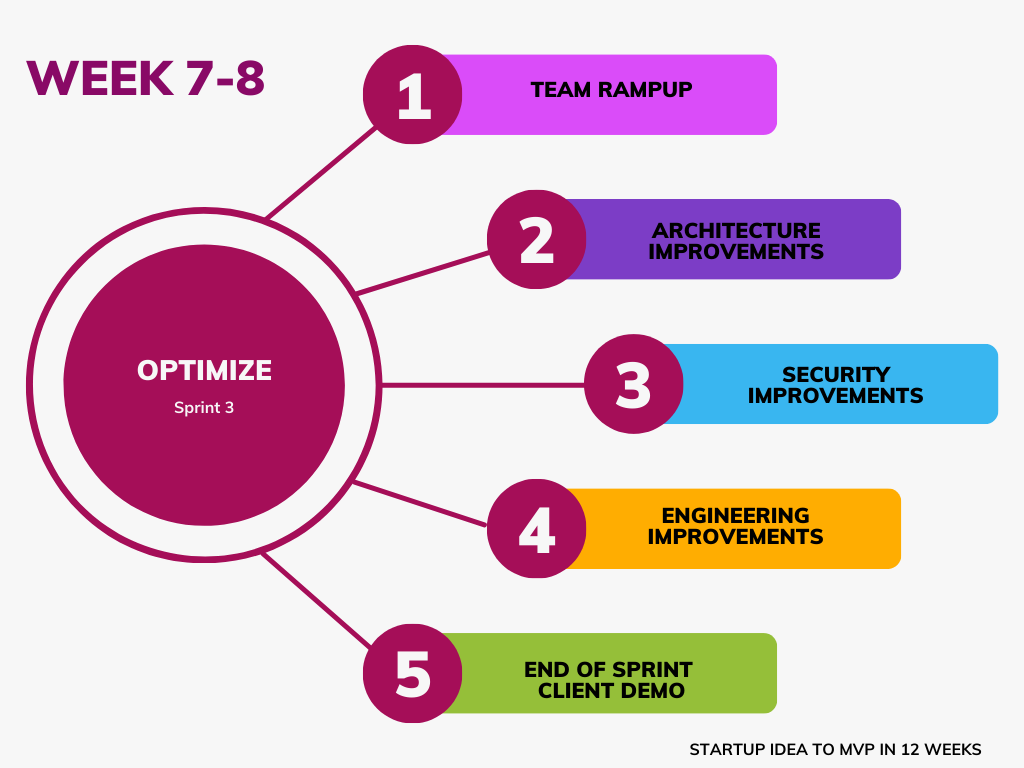
This is the key phase of the product development. We ramp up the software development, as pointed out by the title itself. This is our core activity, as is the case for any software development project.
This is also a good place for you, the customer, to review the feature set, go over the first version of product build and suggest any changes.
We do regular Show and Tell sessions for clients for exactly this reason. We want a customer to keep reviewing the product build and give regular feedback.
This brings the much needed product fine-tuning and ultimately everything happens as per your expectations and to the end-user’s delight!”
Week 9 & 10
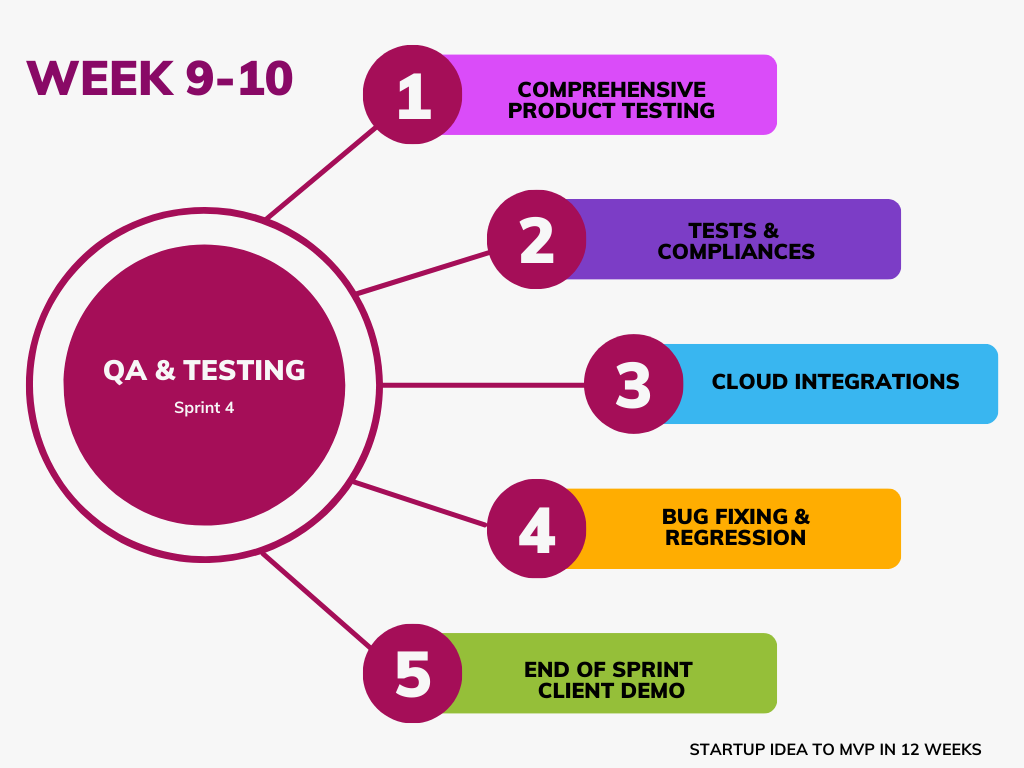
Our week nine and week ten is a part of Sprint number four which primarily focuses on QA and Testing. QA here means quality assurance of the software product.
We check it multiple times to see if it works perfectly, all the use-cases starting from user registration are going well and the user does not face any issues anywhere.
The end user who is using the product may use it in an entirely different way. Meaning, he or she will be using the product in a way that it has not been developed for.
The product may break at times, around the corners. We as developers may know how to use the product correctly but as end-users, it can be a different task, so that’s why each product that is built should be user-friendly, robust, high performance and secure.
Week 11 and 12

Week 11 and 12 is all about Growth, strategy and product launch planning. The previous weeks that we have spent building our product was time well invested.
The important thing which many people tend to miss out on is marketing the product, meaning taking the product to its targeted user. Also, not to say the least, post the marketing and the resulting traction, if you need to raise some funding, you need to plan accordingly and go to the investors as well.
We provide you a very important thing called marketing consultancy. In this, we first help the entrepreneur in sorting out the markets they can target depending upon the type of product they are building.
The product can be either a B2B type of product, meaning you are selling your product or services to another business or it can be a B2C type where you are selling it directly to the end user. In both such scenarios, the market strategy will be different. We help out in selecting the right GTM strategy and in these two weeks we help the entrepreneur to come up with a proper marketing and GTM plan.
What not to expect in a MVP
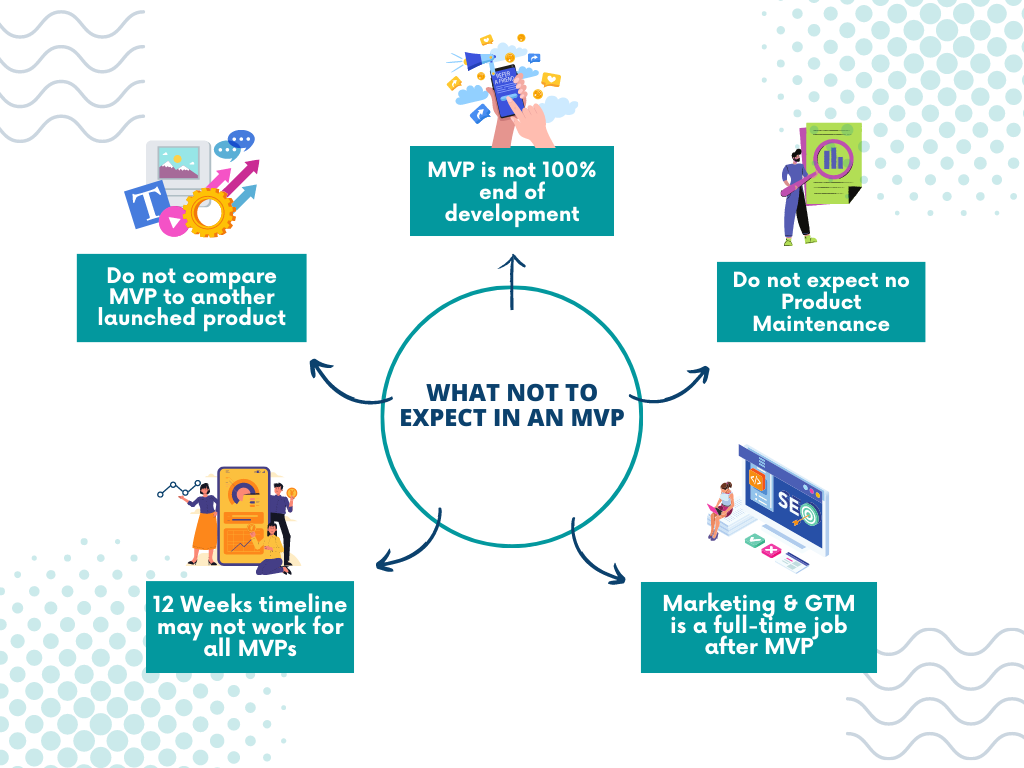
In the last 12 weeks, we went through the detailed journey of building the product MVP. There were deliverables that were expected from week one to week twelve. There are always two sides of a coin, so when we come to the other side of the story, it consists of what not to expect in 12 weeks.
We should understand what is the scope & limitations of the MVP, and not get carried away by another mature billion dollar company or product available in the market.
- When you build an MVP, the idea is not to build a very mature or a final product, it is to present the prototype for your idea.
- Any software product that we release in the market needs a lot of ongoing support & maintenance, whether it is an MVP or any large product that took years to get built, it will definitely need a lot of ongoing software maintenance.
- Twelve week MVP approach typically works with most of the product types, but it may not work for very complex MVPs. You might not be able to do justice to a complex product in just 12 weeks.
- On a lot of projects, sufficient time for GTM is not planned upfront. Most project owners do not spend more time on planning and marketing after the 12 week development is complete.
So we help you adopt the MVP approach, and also guide you with the cases where the MVP approach may or may not fit your use case.
Connect with Frshr Technologies to bring your ideas to success
At Frshr Technologies, our innovative product development approach has been nothing short of revolutionary.
Embracing a conscious mindset, we have championed the concept of agile development, ushering products from mere ideas to fully-fledged Minimum Viable Products (MVPs) in an astonishing 12-week timeframe.
The fruits of this approach have been staggering, with over 30 products launched successfully into the market within the past five years.
We work in Mobile apps, Web products, AI, Machine Learning, Crypto, Enterprise products and Software testing.
Connect with us
Connect with us today for a free session to bring your software ideas to reality.
Setup a meeting with us today